
How Much Does a Kitchen Remodel Cost?
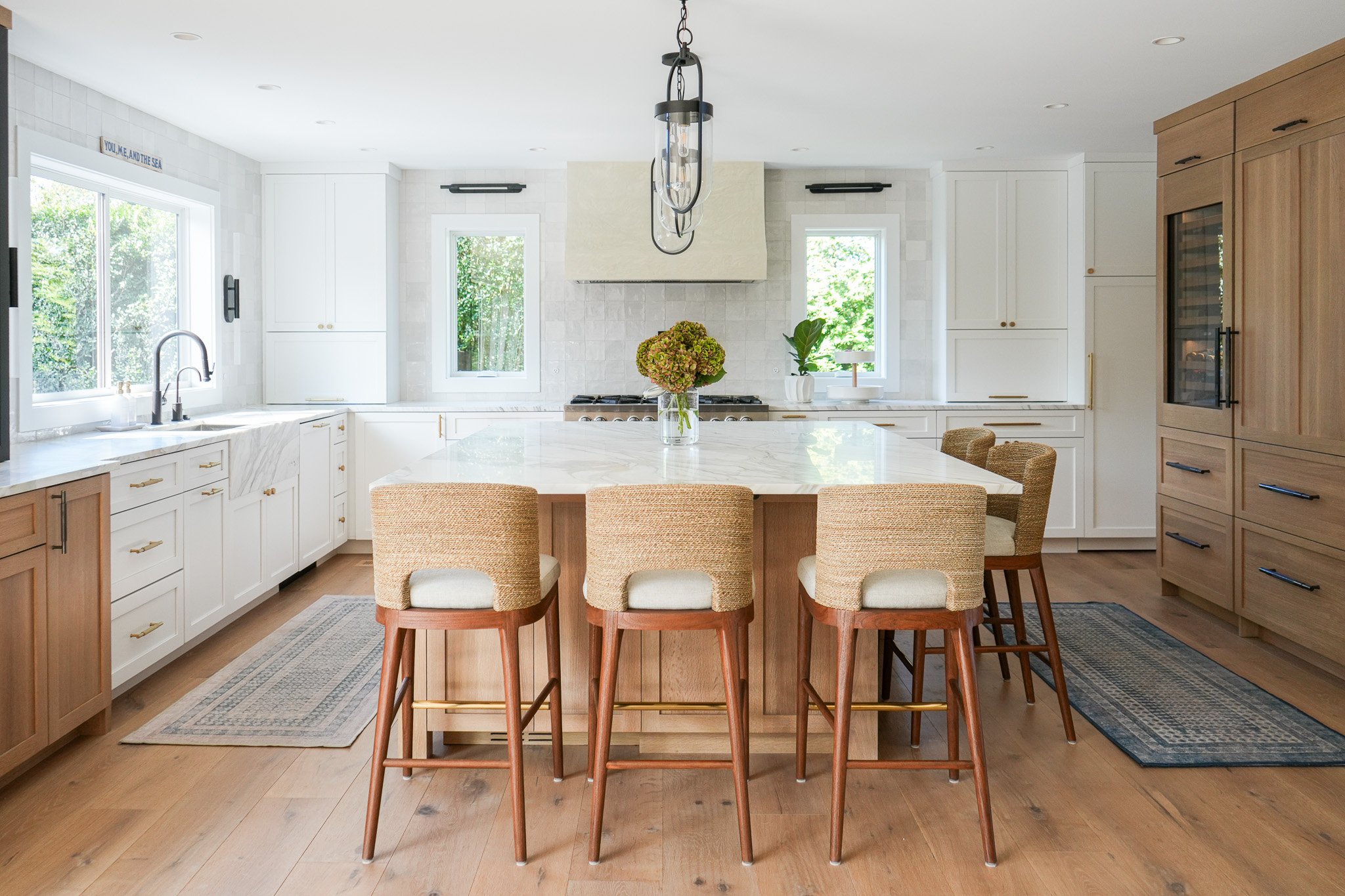
If you've started researching a kitchen remodel, you've probably noticed that every article gives you a different number. The truth is, there's no single answer that fits every kitchen, because the price is shaped by dozens of individual decisions along the way. Rather than throw a figure at you that may not reflect your project at all, we want to walk you through the factors that actually move the needle on cost. After years of designing kitchens across Long Island, these are the two we see make the biggest difference, and how we help our clients navigate them.
The Two Biggest Cost Drivers
1. Cabinet Finish
The finish you choose has a bigger impact on price than most people expect. Standard stains, the kind you'd find on more common wood species, are the most budget-friendly place to start. Once you move into richer or more distinctive woods like walnut or white oak, or exotic species, the cost increases. Painted finishes sit in their own category, too, and if you have your heart set on a custom paint or stain color, that decision alone can shift you into a higher-priced cabinet line, because not every manufacturer is equipped to produce a fully custom finish.
2. Cabinet Construction
The second major driver is how the cabinet itself is built. Overlay construction is the most cost-effective option, and it's still a beautiful, high-quality choice. Frameless construction sits in the middle. Inset cabinetry, prized for its furniture-like, flush appearance, is the most labor-intensive to build and comes with the highest price tag.
Here's the thing to keep in mind: finish and construction don't just affect price on their own; they determine which cabinet lines are even available to you. A custom stain or an inset door style will point you toward a higher-end line capable of producing it. This is one of the biggest reasons two kitchens of the exact same size and layout can land in very different price ranges.
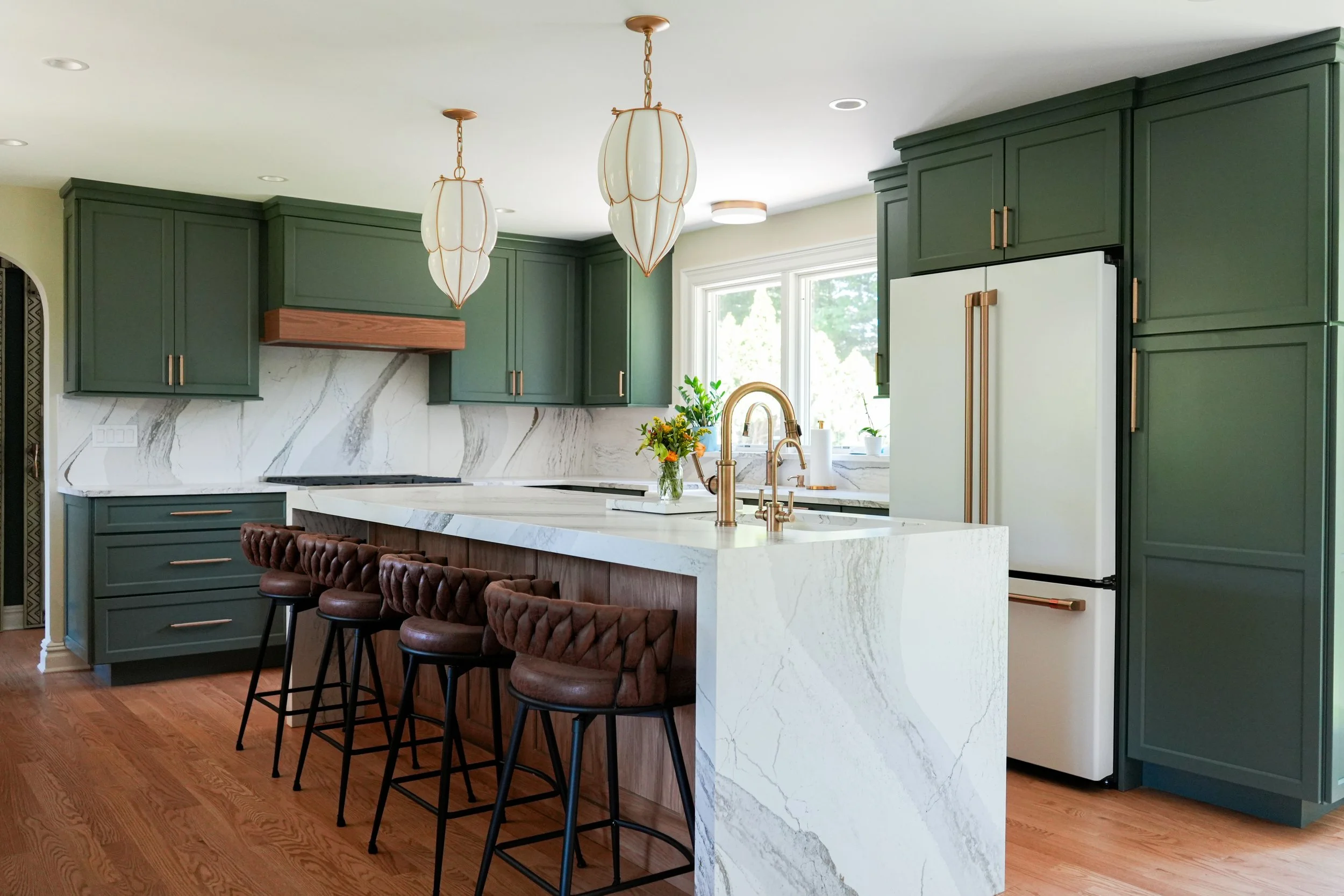
(The Main Avenue Project, showcasing both paint and wood stain finishes in cabinet manufacturer's existing offerings)
A Real Example: Getting the Walnut Look for Less
One of the questions we hear often is how to get a high-end look without the budget that comes with it. In a recent project, a client fell in love with walnut cabinetry but was uncomfortable with the price. Instead of walnut, we used cherry wood, whose natural grain is remarkably similar, and chose a stain designed to mimic that same rich, warm walnut tone. The result reads just as luxurious, at a more accessible price point.
We've also seen clients protect their budget by keeping their existing floor plan intact. Structural changes, especially moving windows or working around load-bearing walls, add real cost to a project. When the layout already works, staying within those walls is one of the simplest ways to put more of the budget toward the cabinetry and finishes that will define the space.
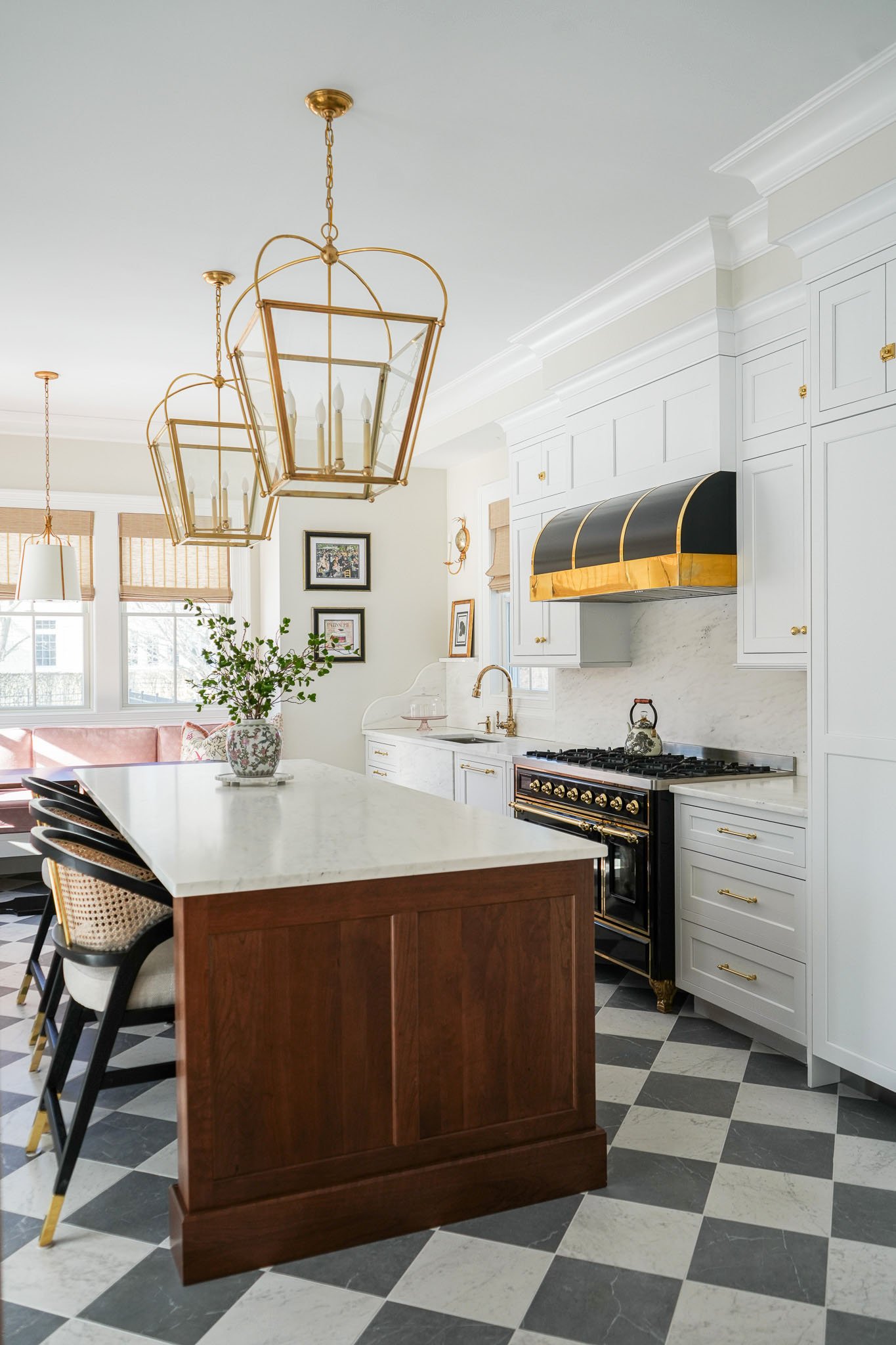
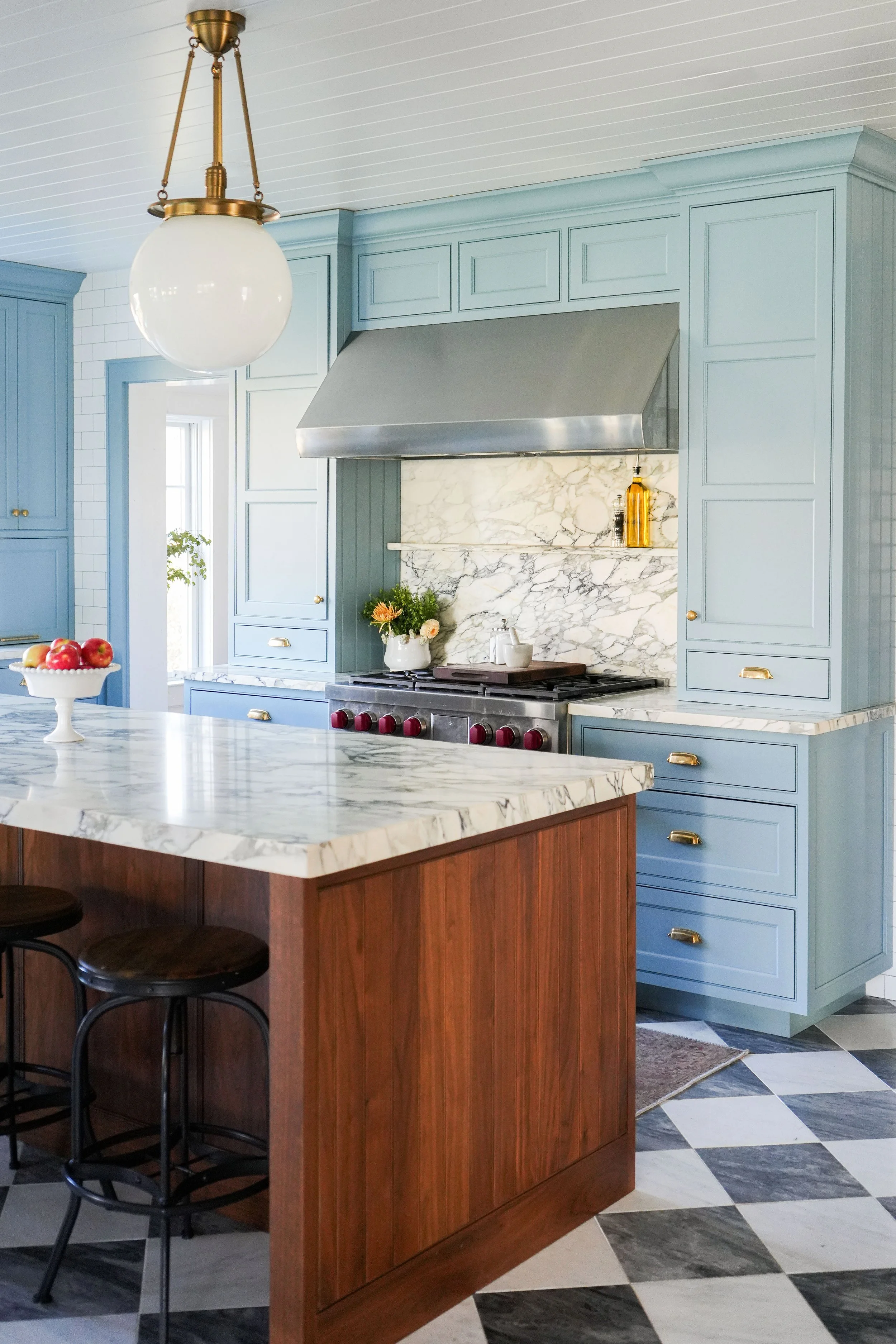
Side by side comparison (Left: The Sixth Street Project showing Eagle Rock Stain on Cherry wood. Right: The Robbins Avenue Project showing Walnut)
What Surprises Most Clients
Two things tend to catch people off guard. First, most clients come in assuming overlay cabinets are a compromise, and they're pleasantly surprised to learn that overlay is simply the most affordable construction method, not a lesser one. You can absolutely have a stunning, high-quality kitchen with overlay cabinetry.
Second, clients are often surprised by how little cabinet accessories add to the overall cost. Pull-out trays, dividers, specialty organizers, these thoughtful extras tend to be a small line item in the bigger picture. What people consistently underestimate is how much finish choice alone can move the number. If you're building a budget, that's the line item to pay close attention to.
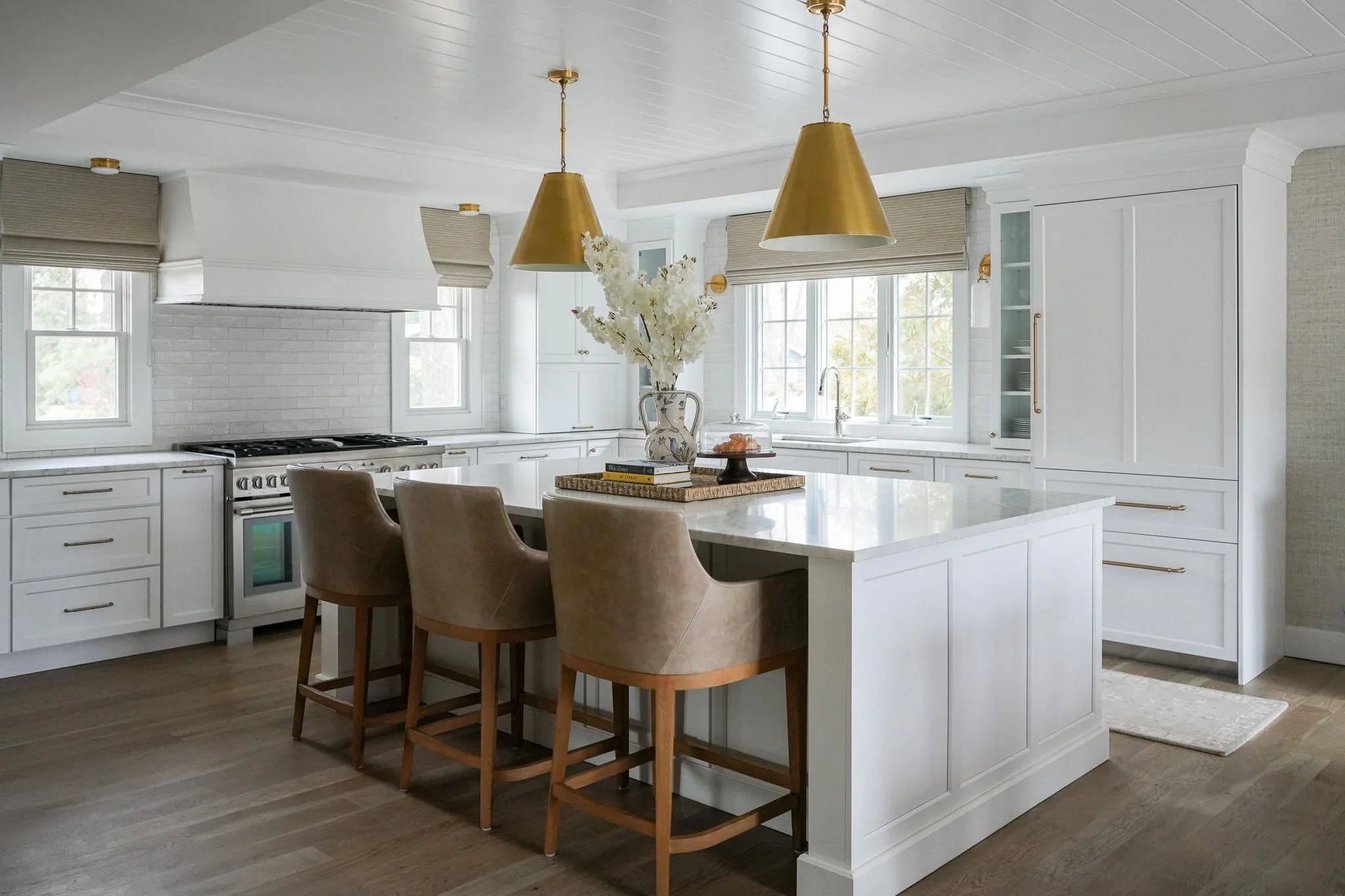
(The Long Bow Court Project, Overlay Doors)
Our Honest Advice: Where to Splurge and Where to Save
After years of doing this, we have strong opinions about where your money is best spent.
Don't cut back on cabinetry quality. Your kitchen and bathrooms are the hardest-working rooms in your home. They see daily use for years, and cabinetry isn't something you casually replace once it's installed. This is the foundation of the room, and it needs to be built well from the start.
Be flexible on construction style. You don't need inset cabinetry to have a beautiful, well-made kitchen. Every line we offer is high quality; that's the benefit of working with a reputable dealer like us. Overlay and frameless construction can look just as intentional and polished when the design is right, and that’s where having one of our skilled designers on your team makes all the difference.
Be flexible on the finish, too. If you love a specific paint color, look for the closest match within your cabinet manufacturer's existing offerings before committing to a fully custom color. You'll often get 95% of the look without the custom upcharge.
Don't skimp on countertops and hardware. These details do a lot of visual and functional heavy lifting, and they're worth the investment.
Save on what's easy to change later. Pendant lights, for example, are simple to swap down the road. If your budget is tight, this is a smart place to hold back now and revisit later.
Where Complexity Adds Up
Beyond finish and construction, the small details you layer on top, reeded panels, rounded or eased edges, custom stains, custom paint colors, all add complexity, and complexity adds cost. None of this means you should avoid these details; it just means it's worth understanding upfront so there are no surprises when you see your quote.


The Bottom Line
A kitchen remodel's cost isn't really about square footage; it's about the choices layered into every cabinet: the finish, the construction, the details. The good news is that within any budget, there's a way to build a kitchen that's beautiful and built to last, as long as you know where flexibility makes sense and where it doesn't.
If you're starting to plan your own remodel and want a clearer sense of what your specific vision would cost, we'd love to talk it through with you. Reach out to schedule a consultation, and let's find the right cabinet line for your kitchen and your budget.